Useful Cebuano (Bisaya) phrases for travellers
In Cebu, people speak Cebuano, which most locals call Bisaya (or Binisaya). It is one of the most widely spoken languages in the Philippines. English is also widely understood, especially in the city and in tourist areas, so you will not get stuck. But a few words of Bisaya always earn a smile, and sometimes a better price at the market.
Do not worry about perfect
Cebuano changes a little from town to town and island to island, and many people mix in English and Tagalog. You do not need to get every word right: a smile and a try go a long way.
How to pronounce it
- Say each vowel clearly: a as in "father", i as in "see", o/u somewhere between "oh" and "oo".
- ng is one sound, as in "sing", even at the start of a word.
- A hyphen or double vowel often means a small stop in the voice, as in "uh-oh".
- The stress is shown in capitals in the hints below. Do not worry about getting it perfect. People will understand you.
Greetings and basics
- Maayong buntag (ma-AH-yong BOON-tag): Good morning.
- Maayong hapon (ma-AH-yong HA-pon): Good afternoon.
- Maayong gabii (ma-AH-yong ga-BEE-ee): Good evening.
- Kumusta? (koo-MOOS-ta): How are you?
- Maayo man (ma-AH-yo man): I'm fine.
- Salamat (sa-LA-mat): Thank you. Salamat kaayo (ka-AH-yo): Thank you very much.
- Walay sapayan (wa-LAI sa-PA-yan): You're welcome.
- Palihug (pa-LEE-hug): Please. You may also see it spelled palihog.
- Oo (OH-oh): Yes. Dili (DEE-lee): No.
- Pasayloa ko (pa-sai-LO-a ko): Sorry, or excuse me.
- Amping! (AM-ping): Take care! A friendly way to say goodbye.
Getting around
- Asa ang...? (AH-sa ang): Where is the...?
- Asa ang CR?: Where is the toilet? In the Philippines a toilet is called a "CR", from "comfort room".
- Lugar lang (loo-GAR lang): Stop here, please. Say it on a jeepney when you want to get off.
- Bayad (BA-yad): Payment. Say it when you pass your fare forward on a jeepney.
- Hinay-hinay lang (HEE-nai HEE-nai lang): Slowly, please.
- Wala (wa-LA): Left. Tuo (TOO-o): Right.
- Diretso (dee-RET-so): Straight ahead.
Note that wala also means "none" or "nothing", so context matters. Our guide to getting around Cebu explains how jeepneys work.
Shopping and money
- Tagpila? (tag-PEE-la) or Pila? (PEE-la): How much?
- Tagpila ni?: How much is this?
- Mahal kaayo (ma-HAL ka-AH-yo): Very expensive. Say it with a smile when bargaining at a market.
- Pwede pa ma-less?: Can you give a discount? A popular mix of Bisaya and English.
- Sukli (sook-LEE): Change, as in money back.
Prices are usually said in English or Spanish-style numbers, so you do not need to learn the Bisaya ones.
Food and drink
- Lami! (la-MEE): Delicious! Lami kaayo: Very delicious.
- Tubig (TOO-big): Water.
- Kaon ta (ka-ON ta): Let's eat.
- Busog na ko (BOO-sog na ko): I'm full.
- Dili halang (DEE-lee HA-lang): Not spicy.
Ready to try the food? See what to eat in Cebu and our lechon guide.
Useful in a pinch
- Dili ko kasabot (DEE-lee ko ka-SA-bot): I don't understand.
- Kahibalo ka mag-English?: Do you speak English?
- Tabang! (TA-bang): Help!
In an emergency, call 911. Read more in our guide to staying safe in Cebu.
Words you will see and hear
- Sugbo (SUG-bo): the old local name for Cebu. You will see it on signs, menus and festivals.
- Dagat (DA-gat): sea. Baybayon (bai-BAI-yon): beach or shore.
- Init kaayo (ee-NEET ka-AH-yo): very hot. You will hear it a lot at midday.
- Ulan (OO-lan): rain. Handy in the wet season.
- Lingaw kaayo (LEE-ngaw ka-AH-yo): so much fun.
- Puso (POO-so): rice cooked in a small pouch of woven coconut leaves, served with grilled meat.
- Sakay (sa-KAI): to ride or get on, as in a jeepney or a boat.
Do not be surprised if people mix Bisaya, English and a little Tagalog in the same sentence. Everyone does, and you can too.
How to address people
Filipinos are polite and often use titles instead of names. You will hear these a lot:
- Kuya (an older man or a male driver or staff member) and Ate (AH-teh, an older woman). These come from Tagalog but are used everywhere.
- Manong and Manang: for older men and women.
- Dong and Day: friendly words for a younger man or woman.
- Sir and Ma'am: used all the time in shops, hotels and restaurants.
You may know the Tagalog word po for politeness. It is understood in Cebu, but locals rarely use it in Bisaya. A warm tone and a "salamat" do the same job.
Start with these five
- Salamat: Thank you.
- Maayong buntag: Good morning.
- Tagpila?: How much?
- Lugar lang: Stop here.
- Lami!: Delicious!
Learning a little of the language is also part of travelling kindly. See our tips for responsible travel in Cebu.
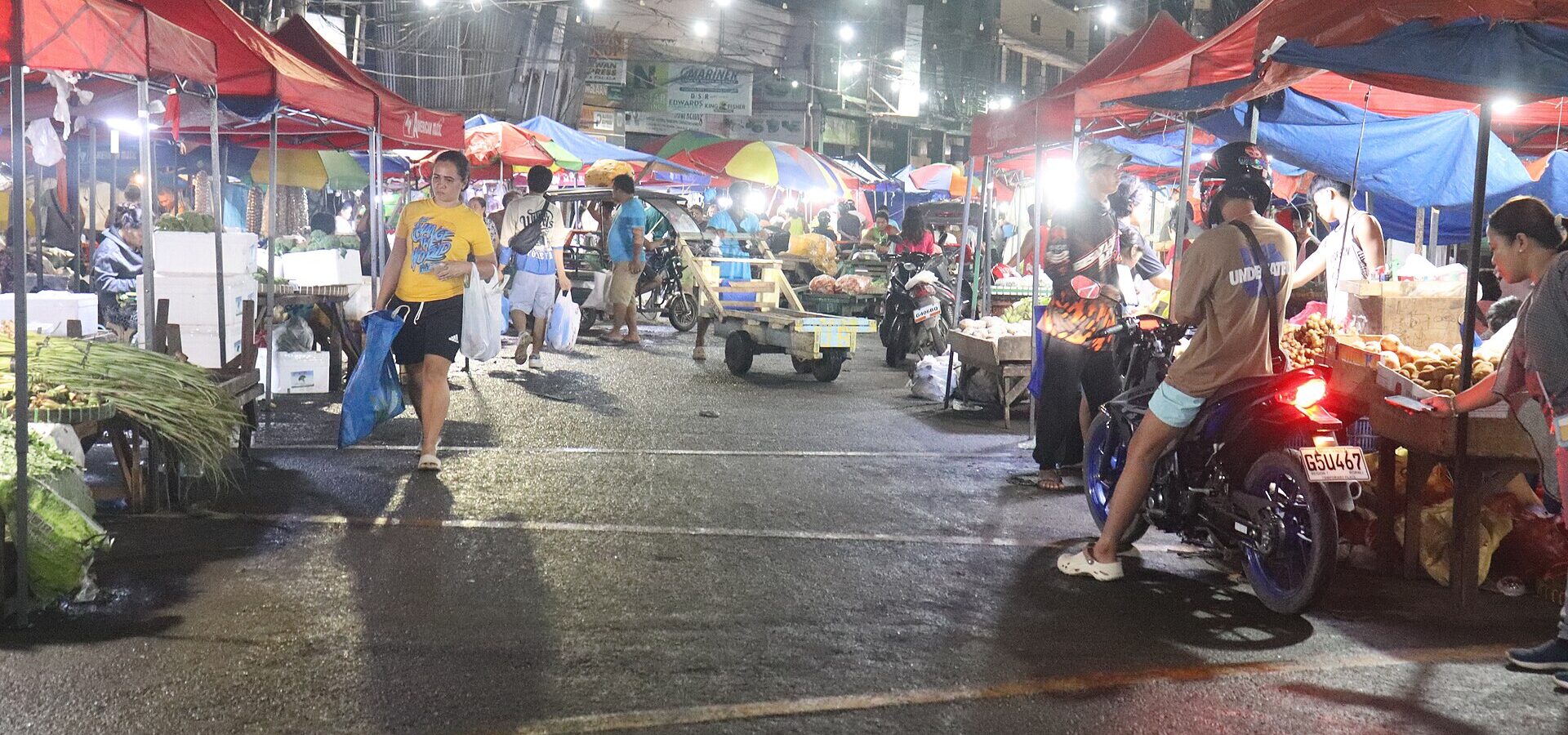
Photo: "WikiNights Cebu - Carbon Market (04)" by Bjeweld, via Wikimedia Commons, licensed under CC BY-SA 4.0.
.jpg)