South Cebu
0 views
Sumilon Island
A small island off Oslob with a white sandbar that changes shape with the seasons, clear water and one of the oldest marine sanctuaries in the Philippines.
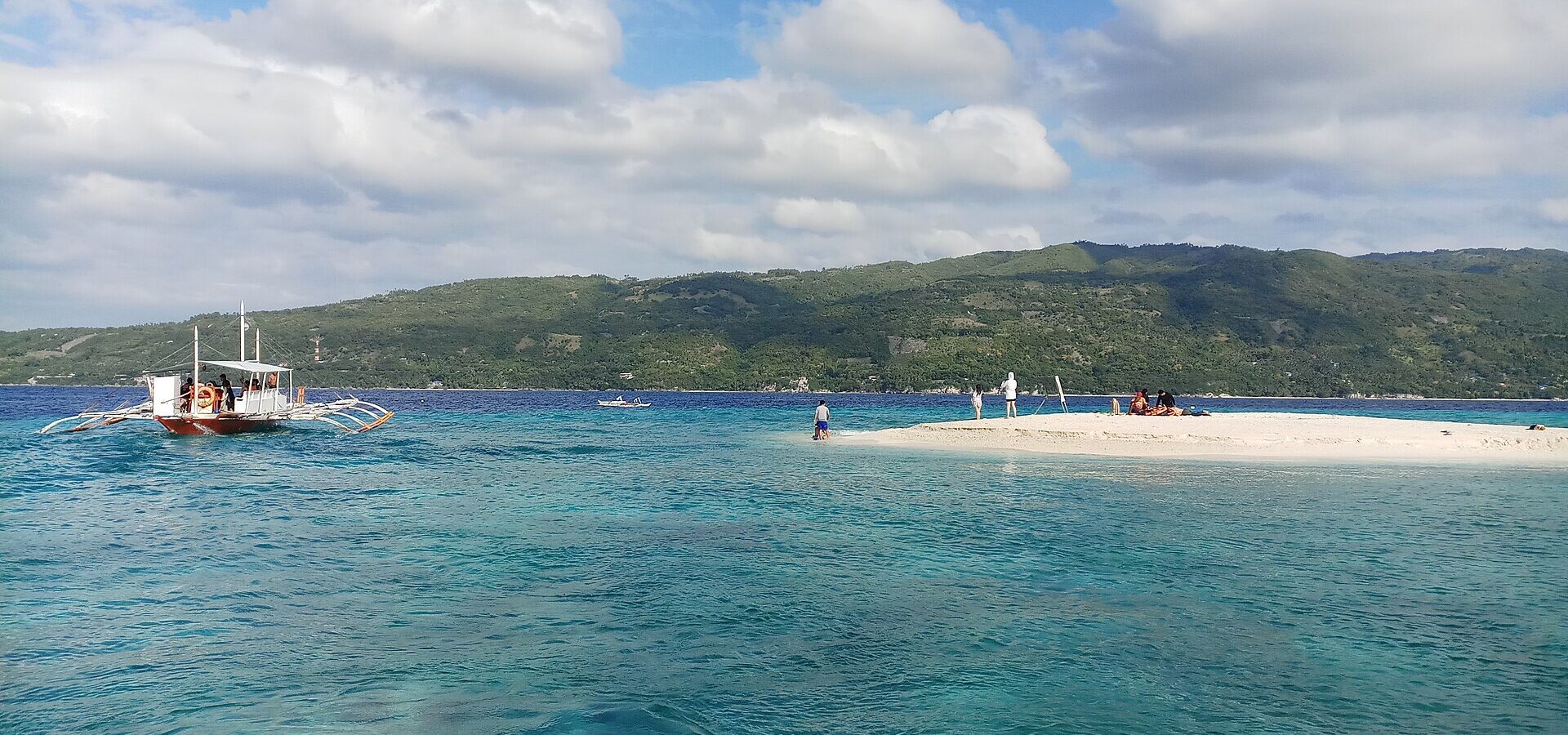
Sumilon is a tiny island of about 24 hectares, just off the southeastern tip of Oslob. It is famous for its white sandbar, a long tongue of sand that reaches out into the blue water and slowly changes shape and position with the seasons. Around it lies one of the most important reefs in Philippine history: in 1974 Sumilon became the country's first marine sanctuary, set up with the help of Silliman University in nearby Dumaguete. Today it is a peaceful place for a swim, a snorkel and a long, slow afternoon.
Why go to Sumilon Island
- The shifting sandbar, with clear, shallow water on both sides and Cebu's mountains behind.
- A protected reef with good visibility, corals and plenty of fish, for snorkellers and divers.
- Quiet nature: a small lagoon with mangroves, forest trails and an old stone watchtower.
- An easy pairing with the whale sharks in Oslob and Tumalog Falls.
The sandbar
The sandbar is the star of Sumilon. It shifts around the tip of the island depending on the season, the currents and the tide, so it looks a little different every time. On a calm, sunny day the water on either side is clear and bright turquoise, perfect for wading and floating. It is also a lovely spot for the late afternoon light. The sandbar sometimes closes for rest days or when the sea is rough, so ask before you go.
The marine sanctuary
Sumilon's reef has been studied by marine scientists for decades. Its history showed the whole country how a no-fishing zone helps fish numbers recover, and the idea later spread to hundreds of community sanctuaries across the Philippines. Divers come for its walls and slopes with good visibility. Snorkellers can see corals and reef fish close to shore when the water is calm.
Please treat it gently: do not stand on or touch the coral, do not feed the fish and use reef-safe sunscreen.
Day visit or resort stay?
The island is home to a single resort, Bluewater Sumilon Island Resort, and most visits run through it. Day visitors usually book a day-use package in advance, which typically includes the boat transfer from the resort's port in Bancogon, lunch and use of the beach and some activities. Boats leave at set times during the day, so book ahead and check the current package, prices and inclusions before you go.
Local boatmen in Oslob may also offer sandbar trips, with separate boat and environmental fees. Rules and fees for these trips change, so confirm the details locally. If you want the island to yourself after the day visitors leave, stay overnight at the resort.
How to get to Sumilon Island from Cebu City
- Go to the Cebu South Bus Terminal.
- Take a bus to Bato via Oslob, down the east coast. The ride takes about 3-4 hours.
- Ask the conductor to drop you at Bancogon in Oslob, near the boat port for Sumilon.
- Check in for your boat and cross to the island, a short boat ride of around 10-20 minutes.
Leave Cebu City early so you do not miss your boat. If you are also seeing the whale sharks, do those first thing in the morning, then head south to Bancogon.
When to go
The dry months, from about January to May, usually bring the calmest sea and the clearest water. From around June to December there is more rain and wind, and boats can be cancelled in rough weather. Weekdays are much quieter than weekends and holidays.
Tips for a good trip
- Book ahead, especially for weekends, and confirm your boat time.
- Bring cash for small fees, plus a card or booking confirmation for the resort.
- Pack a dry bag, a hat and plenty of water. There is little shade on the sandbar.
- Wear a life vest when snorkelling if you are not a strong swimmer, and watch for currents.
- Never touch coral, turtles or fish, and take your trash back to the mainland.
Make it a full South Cebu trip: watch the whale sharks in Oslob at dawn, cool off at Tumalog Falls, then spend the afternoon on the sandbar.
Watch before you go
Photo: "Sumilon Island sandbar" by Warrendering, via Wikimedia Commons, licensed under CC BY-SA 4.0.
Last updated October 16, 2026