Travelling in Cebu during the rainy and typhoon season
You can have a great trip to Cebu in the rainy season. The island is green, there are fewer crowds, and many days are a mix of sunshine and short, heavy showers. But it is also the time of year when tropical storms and typhoons pass through the Philippines, and when they do, boats stop, flights can be cancelled and plans change. With a little flexibility, it is easy to stay safe and still enjoy yourself.
When is the rainy and typhoon season?
Cebu's wetter months usually run from about June to November, sometimes into December. Typhoons can form at any time, but most hit the Philippines between about July and November. Cebu is hit less often than places further north and east, but strong storms still reach it. Typhoon Odette (Rai) caused heavy damage in December 2021, so do not assume the season is over in late autumn. For a month-by-month view, see our guide to the best time to visit Cebu.
How storm warnings work
PAGASA is the Philippine weather agency. When a storm is coming, it raises Tropical Cyclone Wind Signals for each area, from Signal No. 1 (strong winds expected within about 36 hours) up to Signal No. 5 (extreme winds). The higher the number, the stronger the winds expected.
- Follow PAGASA on its website or social media for forecasts and signals.
- Local news in Cebu and your hotel staff will also know what is happening.
- Philippine storm names are local, so the same storm may also have an international name. Do not be confused if you see both.
What happens to ferries and boats
When a wind signal is raised for an area, the Philippine Coast Guard normally suspends sea travel there, even at Signal No. 1. That means ferries to Bohol, Bantayan, Malapascua and Camotes, as well as island-hopping and dive boats, can stop for a day or more. Strong monsoon winds and gale warnings can also stop small boats without a named storm.
This is for your safety. Do not try to find a boat that will "go anyway". Wait it out and travel when the sea is calm again.
Flights
Airlines may cancel or delay flights when a storm is near, and the backlog can take a day or two to clear. Make sure your airline has your phone number and email, and check your flight status before leaving for the airport.
How to plan a flexible trip
- Do the islands first. Visit places reached by boat early in your trip, and finish on the mainland, close to the airport.
- Keep a buffer day before an international flight. Never plan a ferry and an international flight on the same day in the wet season.
- Book flexible rooms and tickets where you can, with free changes or cancellation.
- Have a rainy-day plan, such as the heritage sites in Cebu City, museums, malls and food trips. Our guide on what to eat in Cebu has ideas.
- Check the forecast every day, not just before you fly.
Travel insurance
Good travel insurance is worth having at any time of year, and especially in the rainy season. Before you buy, check that it covers:
- Trip delays and missed connections caused by weather.
- Cancellation or cutting your trip short.
- Medical care and emergency evacuation.
- Activities you plan to do, such as diving, canyoneering or motorbike riding.
Buy it early. Many policies do not cover a storm once it has already been named.
Safety during heavy rain and storms
- Stay away from rivers and waterfalls after heavy rain. Water can rise very fast, so canyoneering and waterfall trips are often cancelled. Follow your guide's decision.
- Mountain roads can have landslides and flooding. Avoid long road trips during a storm.
- If a storm is coming, stay where you are, stock up on water, snacks and cash, and charge your phone and power bank.
- Follow instructions from your hotel and local officials. In an emergency, call 911.
The good side of the rainy season
Rain often comes in short bursts, and many days are still sunny. The countryside is lush, waterfalls are full, hotels are quieter and prices can be lower. Underwater life does not stop either: Moalboal's sardines and the thresher sharks at Malapascua can be seen all year, when boats are allowed to go out.
Rainy season packing
- A light rain jacket or poncho.
- A dry bag and zip-lock bags for your phone and passport.
- Sandals or water shoes that dry quickly.
- A power bank and a small torch.
For a full list, see the Cebu packing list, and read our tips on staying safe in Cebu.
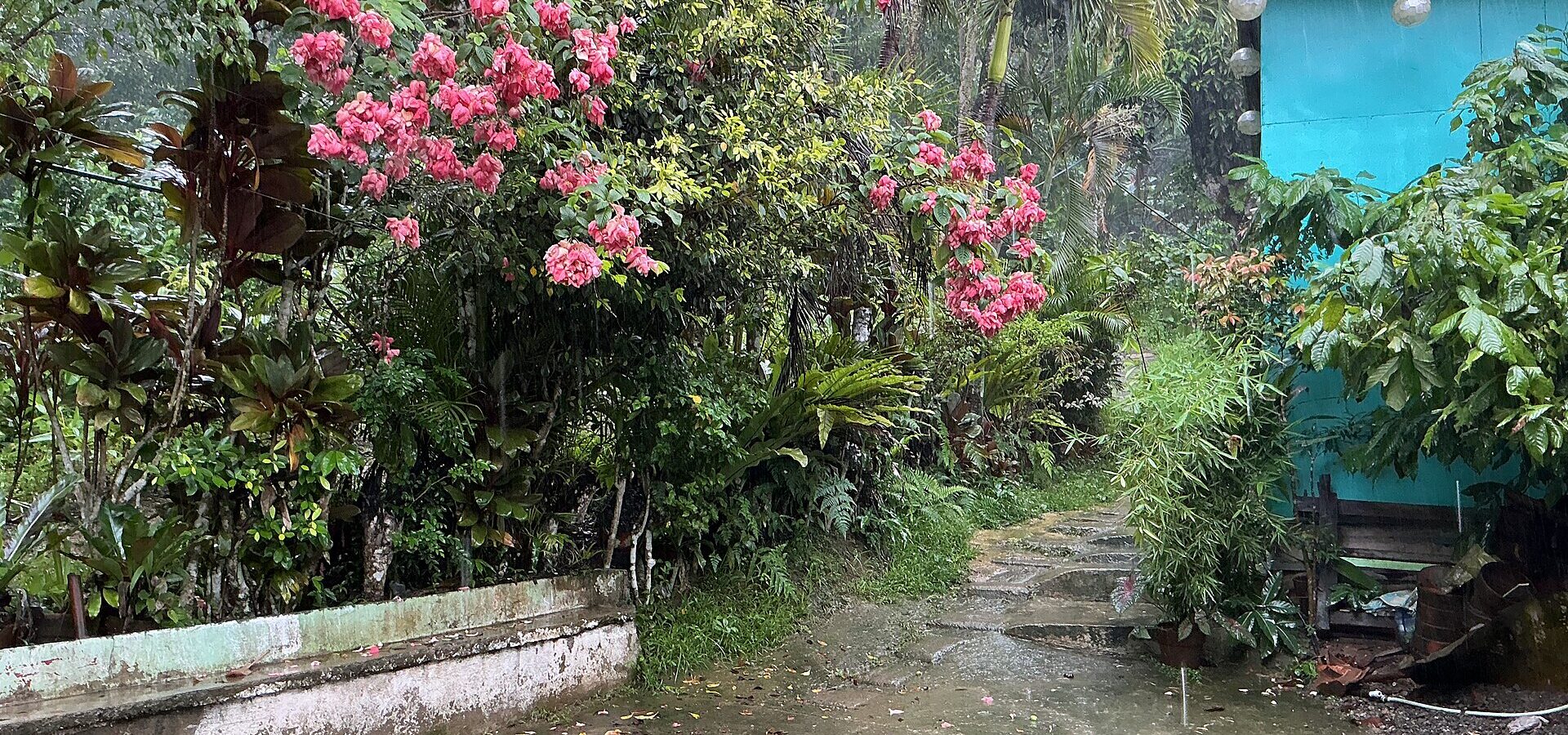
Photo: "Rainy season in Cebu City" by Ilovemilk.x, via Wikimedia Commons, licensed under CC BY-SA 4.0.
