Basilica del Santo Nino and Magellan's Cross
The oldest Catholic church site in the country and the Holy Child image behind it, with Magellan's Cross in its kiosk next door. Free to enter. Pilgrim customs, dress code and etiquette explained.
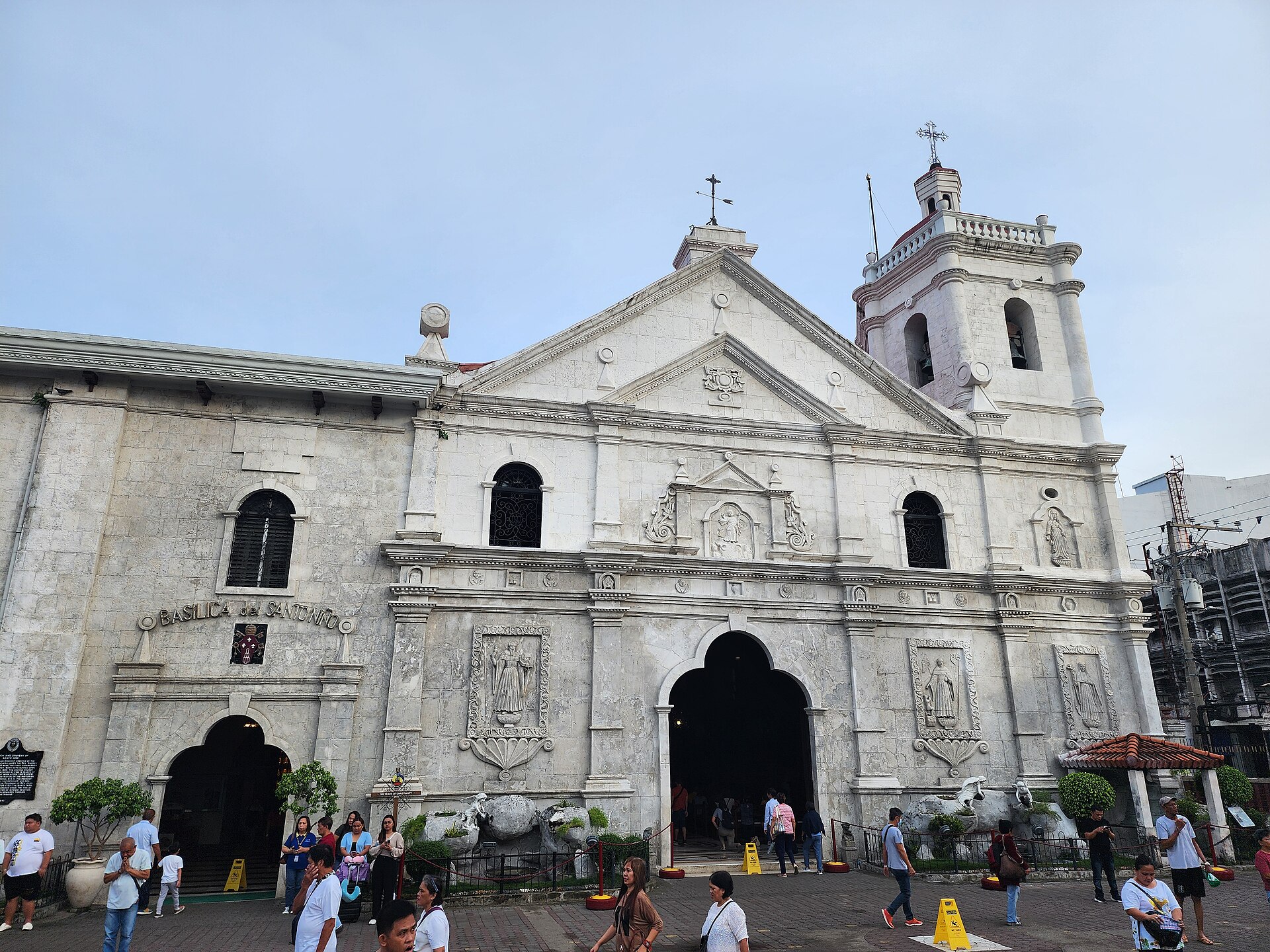
Right in the middle of old Cebu City, two sites stand almost side by side: the Basilica Minore del Santo Nino and Magellan's Cross. Together they are the spiritual heart of the city. The basilica is described as the oldest Catholic church site in the country, founded in 1565, and it keeps the small wooden image of the Holy Child that Ferdinand Magellan's expedition gave to the Cebu queen in 1521. This guide goes deeper on these two sites and on how to visit them respectfully. For the wider old-town route, see our Cebu City heritage guide.
Why visit the Basilica and Magellan's Cross
- The oldest church site in the country, with a story that runs from 1521 to today.
- A living place of faith. Pilgrims pray, light candles and sometimes dance here every day, so you see devotion, not just a monument.
- Magellan's Cross in its small coral-stone kiosk, with a painted ceiling, next door.
- Free to enter, easy to reach, and a good half-day with Fort San Pedro and the old town.
A short history
In April 1521 Magellan's expedition reached Cebu. The ruler, Rajah Humabon, and his wife were baptised, and the queen received the image of the Santo Nino (the Holy Child). Magellan was killed on Mactan a few weeks later and the expedition left. In 1565 the Spanish under Legazpi returned, and the image was found, according to the traditional story, kept safe in a burnt house. The Augustinian friars founded the church on that spot on 28 April 1565, which is why the Kaplag (the finding) is marked every April.
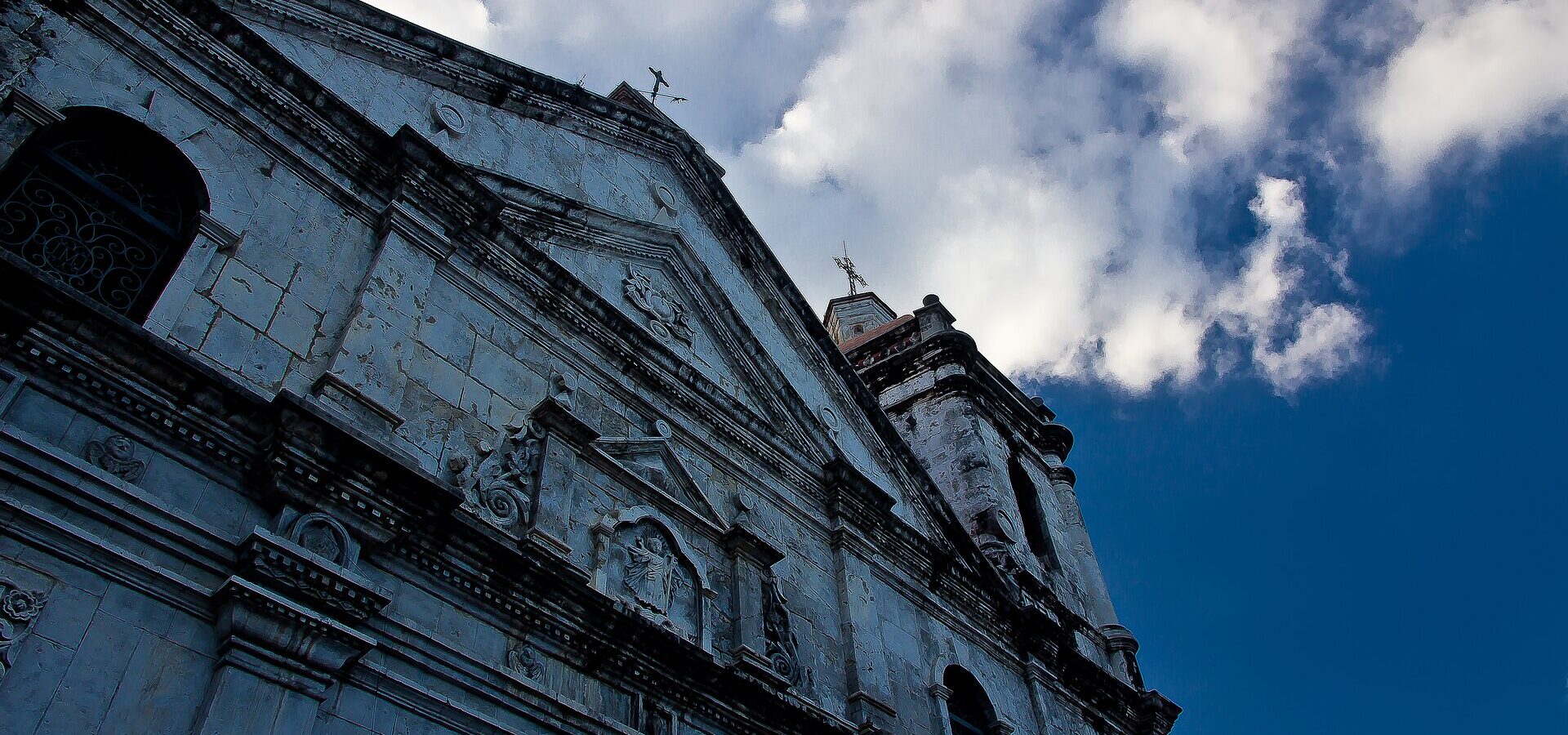
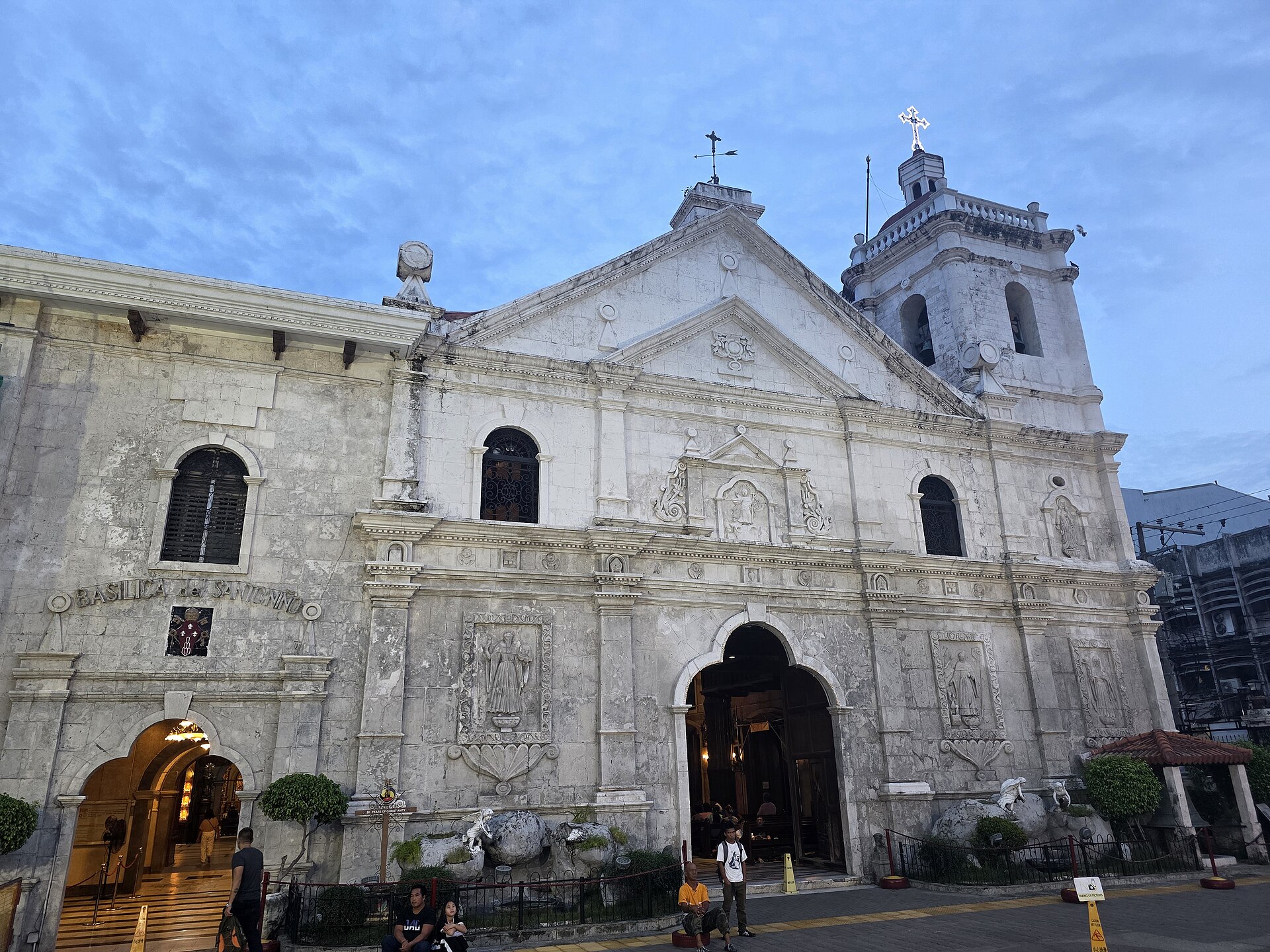
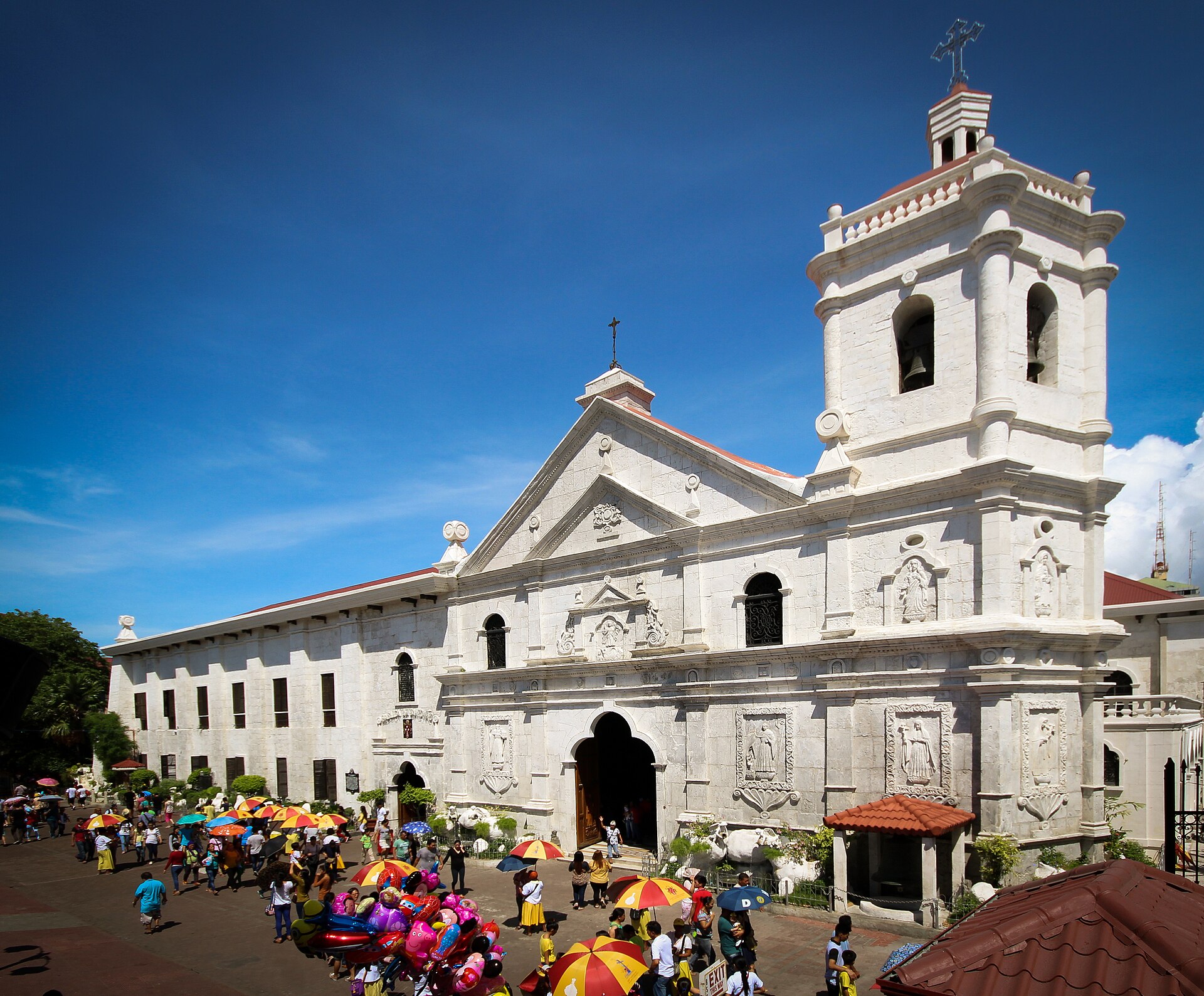
The first wooden church burned, as did a later stone one. The building you see now was put up in the 1730s and has the thick stone walls and heavy buttresses typical of the Spanish colonial era. It became a minor basilica in 1965, and in 2021 the church and convent were declared a National Cultural Treasure. The 2013 earthquake damaged the bell tower and front, and the church was restored over the following years.
What to see
Inside the basilica
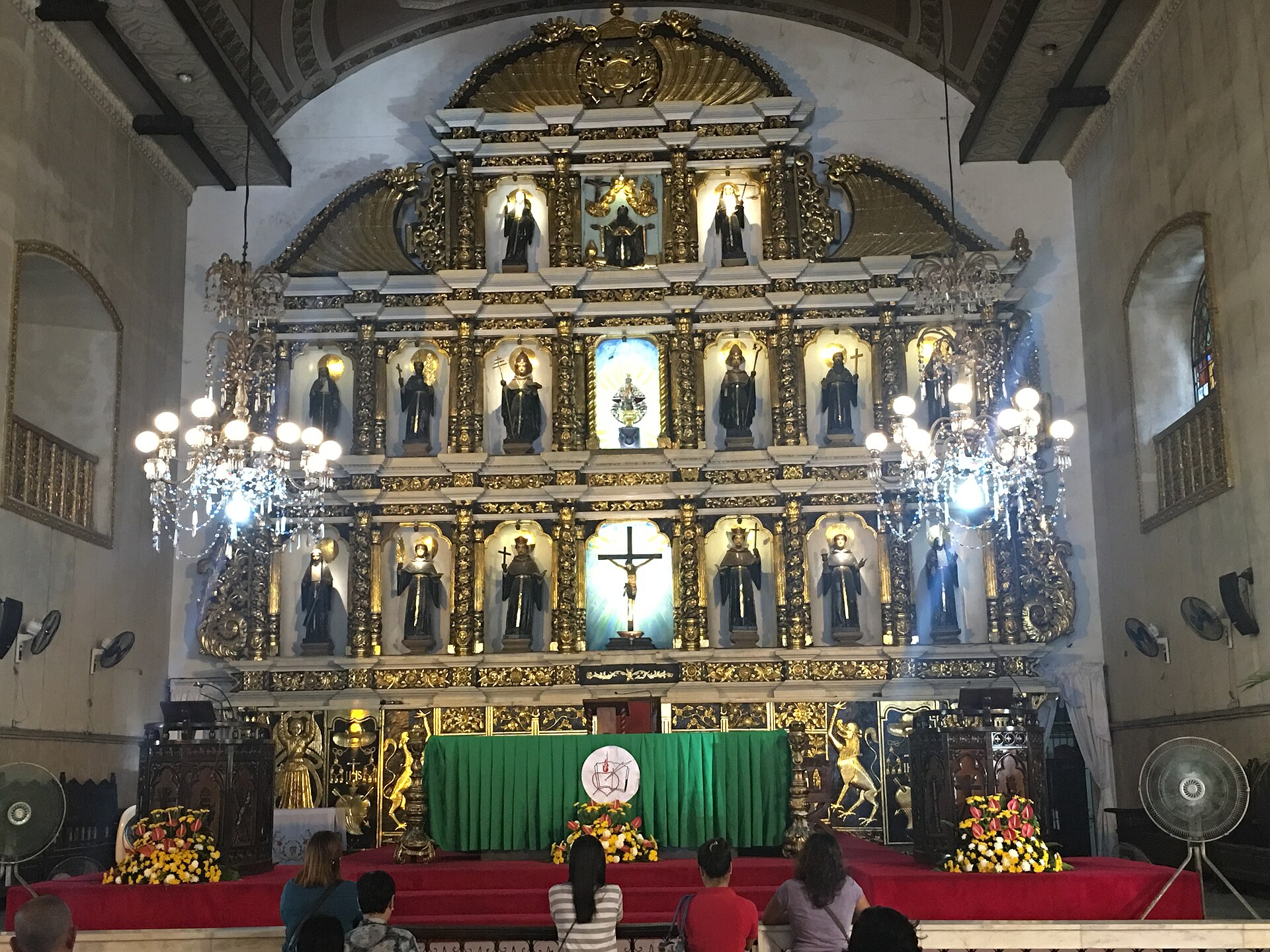
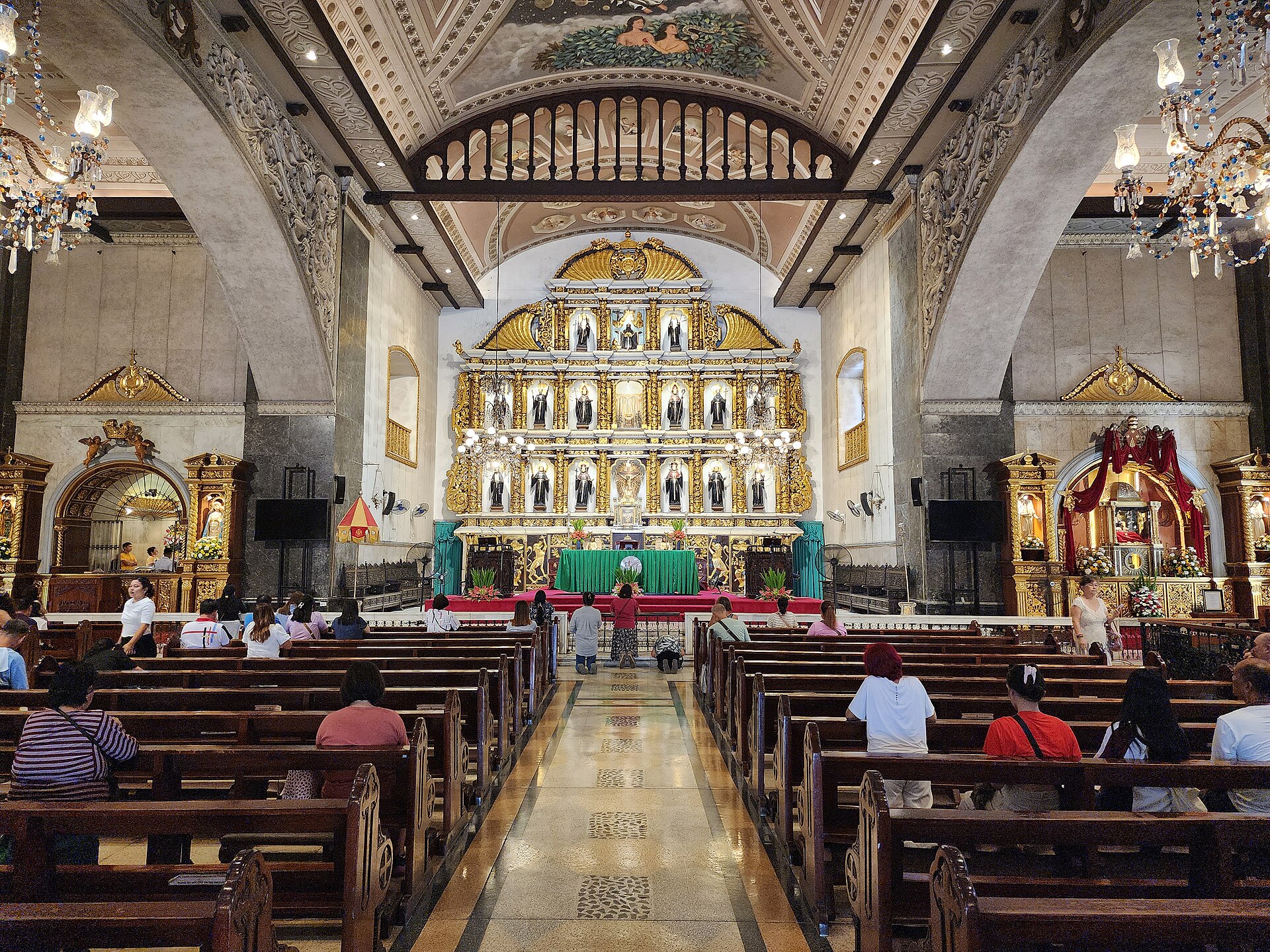
The main church has a gilded altarpiece and a quiet, busy atmosphere. The original Santo Nino image is kept in its own chapel, to the right of the main altar, behind glass. Queue calmly and keep moving when you reach the front. Many people also light candles outside, in front of the church, and say a prayer.
Magellan's Cross
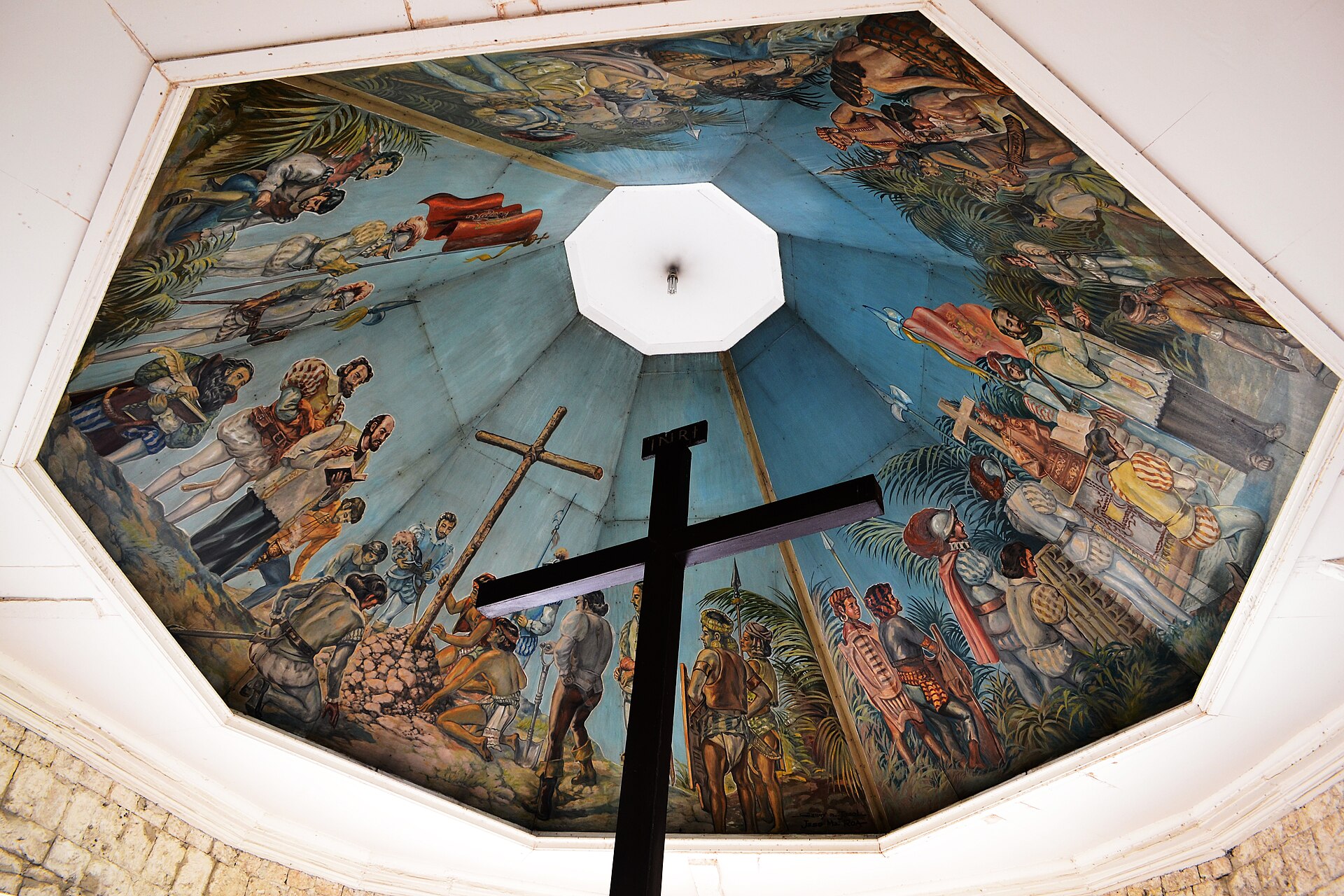
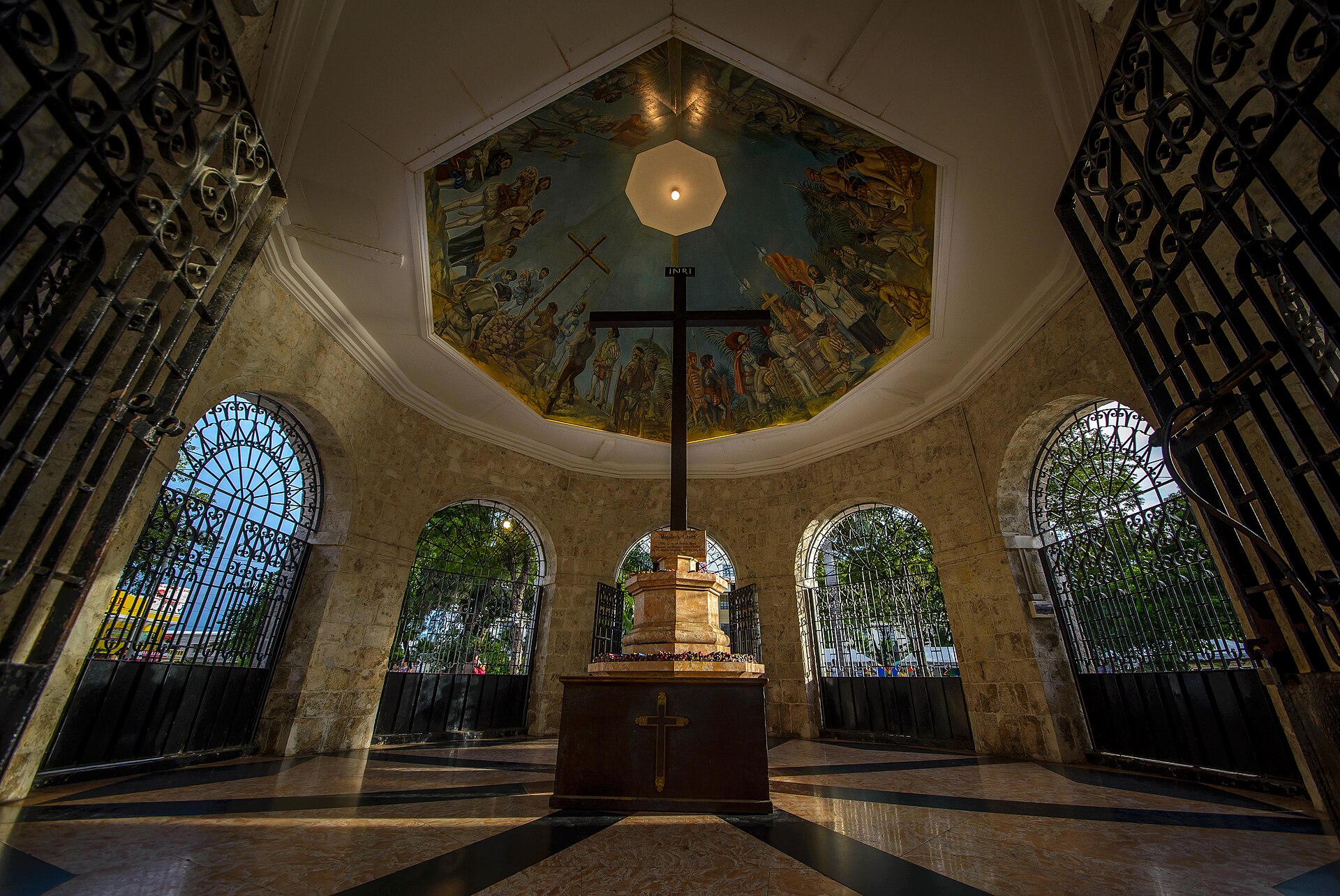
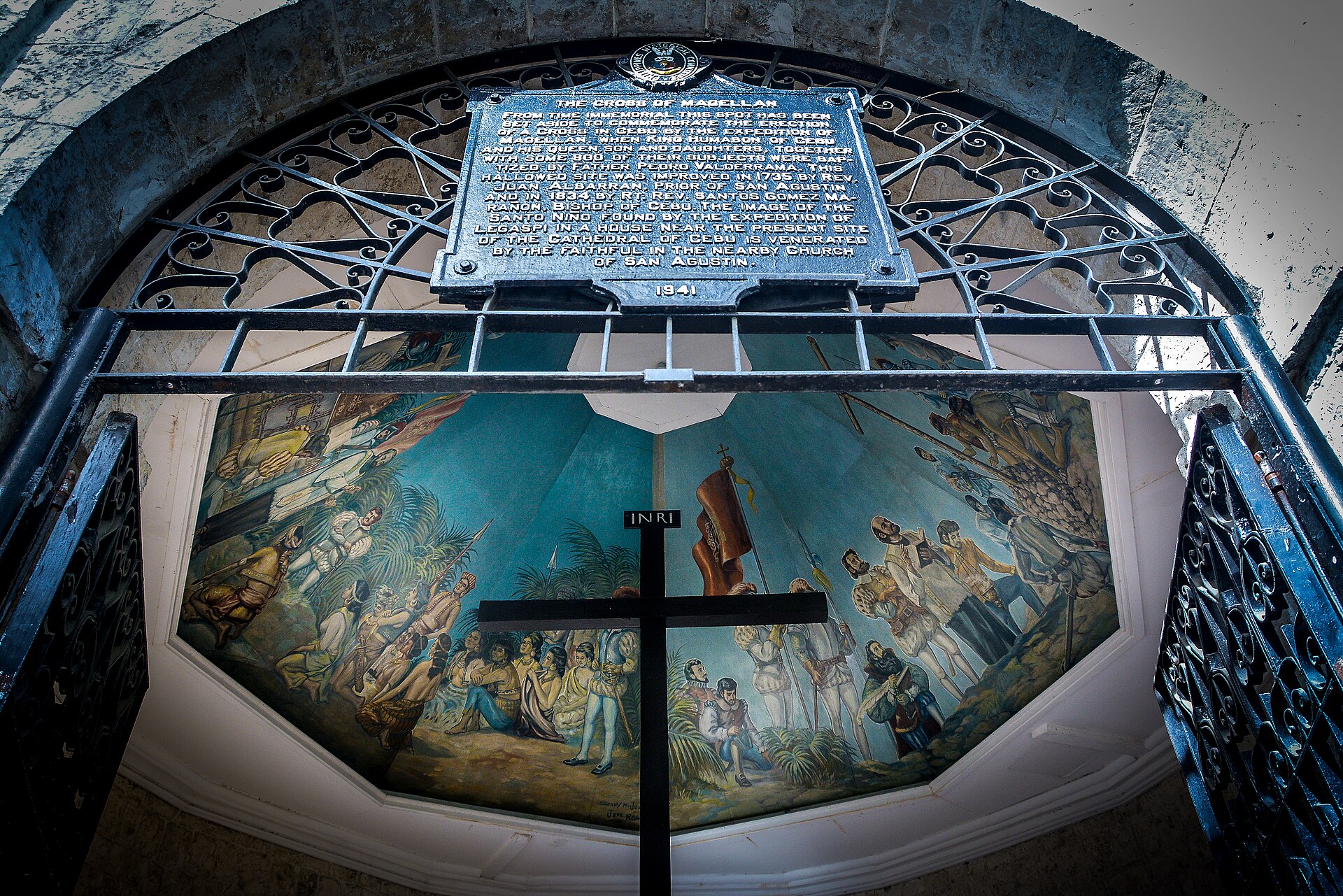
The cross stands in an octagonal coral-stone kiosk beside the basilica, finished in the 1830s. The ceiling is painted with scenes of the baptism and the planting of the cross. The wooden cross you see is made of tindalo wood and is said to enclose the original cross. In 1835 it was encased in wood because people kept chipping off pieces, believing they were holy. The kiosk was damaged by the 2013 earthquake and again in 2025, and it has been closed at times. When it is closed you can still pray outside and light a candle.
The museum and Pilgrim Center
The basilica museum is in the basement of the Pilgrim Center, across the open courtyard. It was set up in 1965 and shows church treasures, vestments and offerings to the Santo Nino. It has its own small fee.
Pilgrim customs and etiquette
- Candle vendors (the tig-sinug) will light a candle for you and say a short prayer in Cebuano while doing a gentle prayer dance. This is the original Sinulog. Agree the price first. A donation is fine and is not rude.
- Friday is the traditional devotion day, so it is busier, with more Masses and crowds.
- Keep your voice low inside, do not use flash, and do not photograph people praying up close. Ask first.
- Do not touch the glass, the altar or the statues unless you see others doing so as part of the devotion. Follow the staff.
- Keep your hat off inside and silence your phone. Do not eat or drink in the church.
The grand festival version of the dance happens every January. See our Sinulog festival guide and the Cebu festivals tip for dates and crowd advice.
Dress code and Mass times
The Augustinian friars introduced a dress code in October 2024, and news reports from 2025 and 2026 show it is enforced. As reported, you should not wear shorts, sleeveless tops, tank tops, crop tops, short skirts, ripped jeans, or caps and hats in the church. Wear long trousers or knee-length skirts, and tops with sleeves. The church no longer lends shawls, so bring your own. Security may also ask you to leave big backpacks outside, so travel light.
Masses are held every day in Cebuano and English, from early morning to early evening, with more on weekends and Fridays. The exact times change, so check the board at the church or the basilica's official site and Facebook page.
Where is Basilica del Santo Nino and Magellan's Cross?
Cebu City, Cebu
Directions open in Google Maps, starting from where you are. Its travel times are estimates, and ferries and island boats may not be included.
Getting there from Cebu City
- The basilica is on Osmena Boulevard corner P. Burgos Street, in the old town. From downtown, a taxi or ride-hailing car takes about 10-25 minutes, depending on traffic.
- From Mactan-Cebu Airport, allow about 30-60 minutes by taxi or ride-hailing car. See Mactan Airport to Cebu City.
- Many jeepneys run along Colon, Osmena Boulevard and Magallanes Street. Ask the driver or conductor if they pass the Basilica, or get down near Colon and walk.
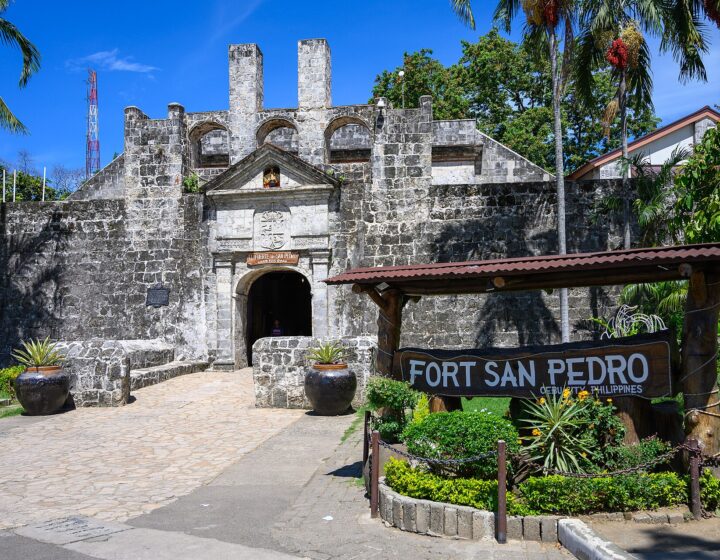
- From Fort San Pedro, the walk takes about 10-15 minutes. Magellan's Cross is right beside the basilica.
Entrance, fees and opening hours
Entering the basilica and seeing Magellan's Cross is free. Reports in 2026 say the church opens early in the morning and closes in the evening, with longer hours on weekends and around the fiesta in January. The museum was reported as open daily with a lunch break, with entry of about ₱30 for adults and less for seniors and students. These are estimates, so check at the door.
Getting around
Everything here is within a short walk of the plaza, so wear comfortable shoes. For longer trips, use a taxi or app. See getting around Cebu.
Where to stay and eat
The old town has simple places to eat, and the streets around Colon have cheap Cebuano meals. For a bigger choice, base yourself in the Fuente Osmena or Cebu Business Park areas. Our where to stay and what to eat tips have more.
When to go
Go in the early morning for the calmest visit and the best light. Weekday mornings are quietest. January is the Sinulog season, with huge crowds and road closures, and April has the Kaplag. If you want peace, avoid both.
Tips for a good trip
- Allow about 1.5-2 hours for the basilica, the cross and the museum.
- Dress modestly before you leave your hotel, to avoid being turned away.
- Carry small bills for candles and donations.
- Keep your bag zipped. Crowded church areas attract pickpockets.
- Do not treat the church as a photo stop. Skip selfies during Mass.
- A friendly no is fine if you do not want a candle.
To keep going, visit Fort San Pedro, the old house museum Casa Gorordo, or read the full Cebu City heritage guide.
Photo gallery
Tap a photo to see it full size. Gallery photos come from Wikimedia Commons; each photographer's credit shows when you open the photo.
Watch before you go
Photo: "Basilica Minore del Santo Niño Cebu" by Ipepot, via Wikimedia Commons, licensed under CC BY-SA 3.0.
Last updated October 28, 2026
Use this page
Writing about this trip, or planning one? Copy a link or citation in one tap, or print this page to take with you.
See what gets copied
- Link code
<a href="https://touristbooklet.com/destinations/basilica-santo-nino/">Basilica del Santo Nino and Magellan's Cross - Tourist Booklet</a>- Citation
- Basilica del Santo Nino and Magellan's Cross. Tourist Booklet. Last updated 28 October 2026. https://touristbooklet.com/destinations/basilica-santo-nino/
From Tourist Booklet: https://touristbooklet.com/destinations/basilica-santo-nino/. Last updated 28 October 2026. Prices and times change, so check before you go.